DOPO LE SEI DI SERA. DRIFTS OF MAGIC REALISM
CURATED BY GAIA BOBÒ
ALESSIA ARMENI, ANNE BUCKWALTER, DARIO CARRATTA, RUOXI JIN, LUCA RUBEGNI
OPENING THURSDAY 14 MAY 2026
UNTIL 24 JULY 2026









Dopo le sei di sera. Drifts of Magic Realism
Gaia Bobò
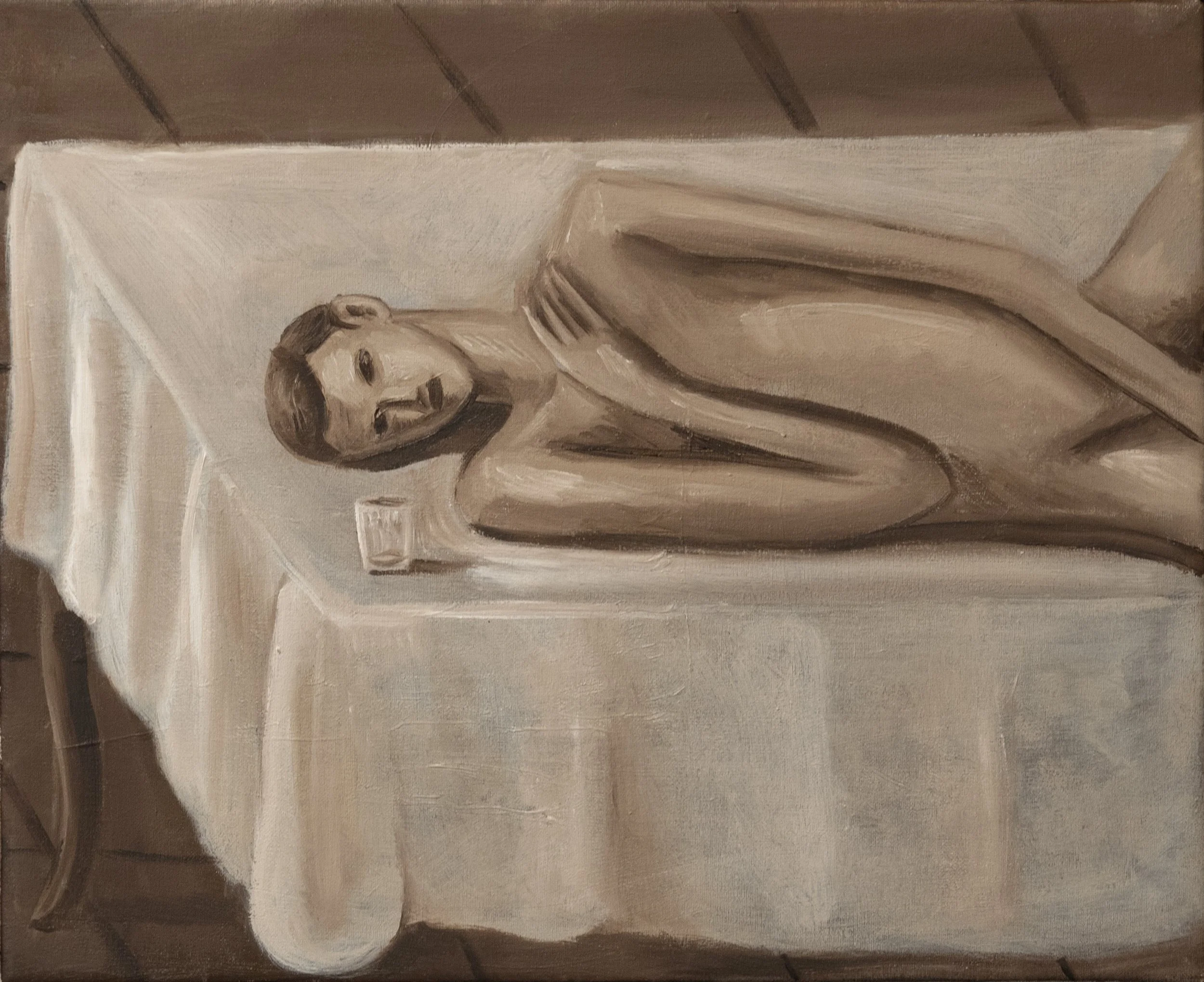
There is a silent dynamic embedded in the term drift, carrying with it a tension between two possible meanings: linear progression and involuntary deviation. This dual movement sets organic progression against the contingency of an unforeseen turn, contrasting a process of evolution with one of mutation. Between these two ideas, it is perhaps the latter - in which currents and oblique flows oppose a predefined trajectory - at which this exhibition looks, imagining an open dialogue with the historical experience of Magic Realism. The exhibition does not, in fact, pursue a philological ambition, nor does it seek to celebrate a programmatic return to the figurative tradition associated with that experience, even if the phenomenon is undoubtedly seen within the broader horizon of contemporary painting. Rather, the research behind this project aims to critically connect a number of artistic practices that, more or less intentionally, have touched upon certain strings of Magic Realism - at times isolating one of its specific qualities, at others playing with its formal suggestions - while never translating this experience into a personal and autonomous aesthetic system.
Dopo le sei di sera rummages through the trunk of hidden things, and makes historicity its very manifesto: this formula in fact appeared on the gallery’s invitations as early as the 1960s, when it still has the name Il Segno under the direction of Angelica Savinio, indicating the opening time of exhibitions. On the present occasion, Dopo le sei di sera is placed at the center of a semantic displacement that transforms it into a title, allowing its visual potential to surface. The evocation of Magic Realism is therefore not only a tribute to the gallery’s genealogical tree - it was Alberto Savinio himself who, speaking of his brother Giorgio de Chirico’s work, referred to him as a “modern magician” - but also the ideal ground for a practice of resignification that unfolds through language. The very nature of the title is, in fact, an example of Magic Realism: a piece of practical information, discreet and marginal in presence, may conceal within itself an ambiguous side, an unexplored mystery. Its twilight character becomes the ideal environment for the activation of a suspended temporality that is perhaps the primary bond among the artists featured in the exhibition.
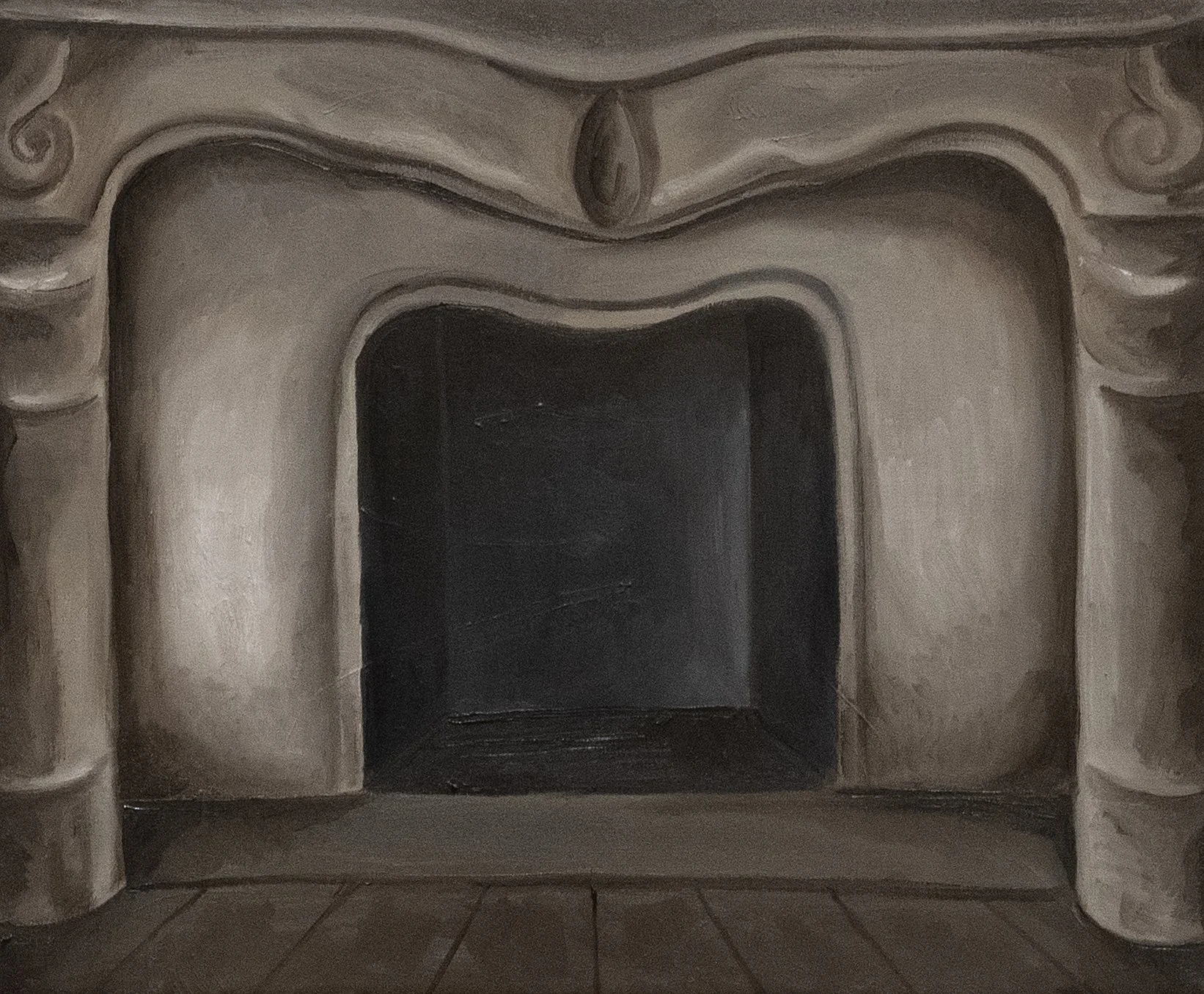
A first example of this is the atmospheric metaphysics of Alessia Armeni, whose works isolate within their pictorial field fragments of architectural interiors that gradually lose their recognizable features. The artist employs the mirror both as a device for constructing the image and as a visual expedient, visible within the work itself. For Armeni, inversion becomes a radical action in which reality, once translated into painterly substance, assumes a different spiritual consistency. Light is the element that permeates this new dimension and defines its contours: it is from light that surfaces begin to vibrate, aided by variations in the intensity of the brushstrokes. Through the progressive renunciation of the subject’s specificity, the artist condenses a mystery that is thereby integrated into the language of painting.
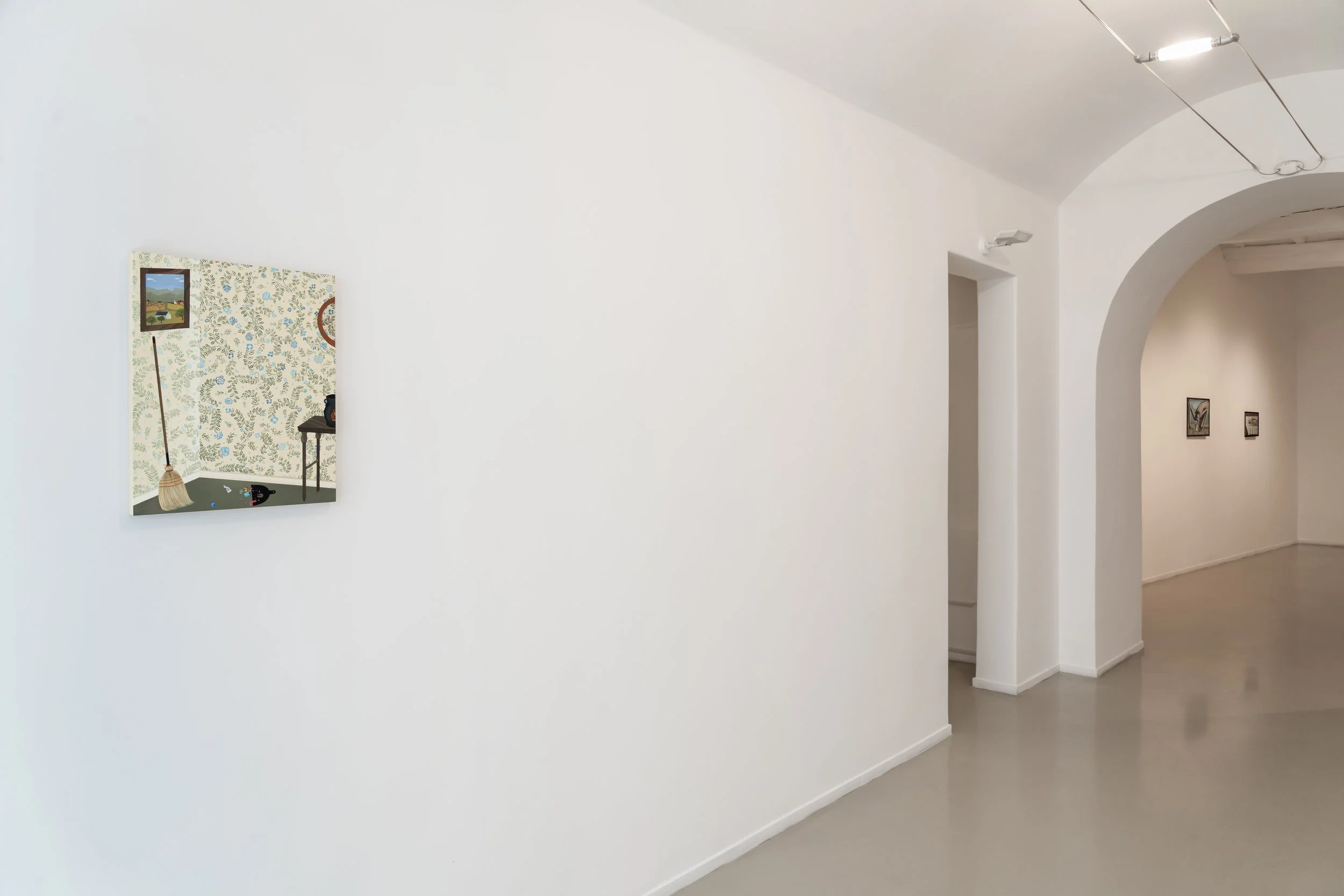
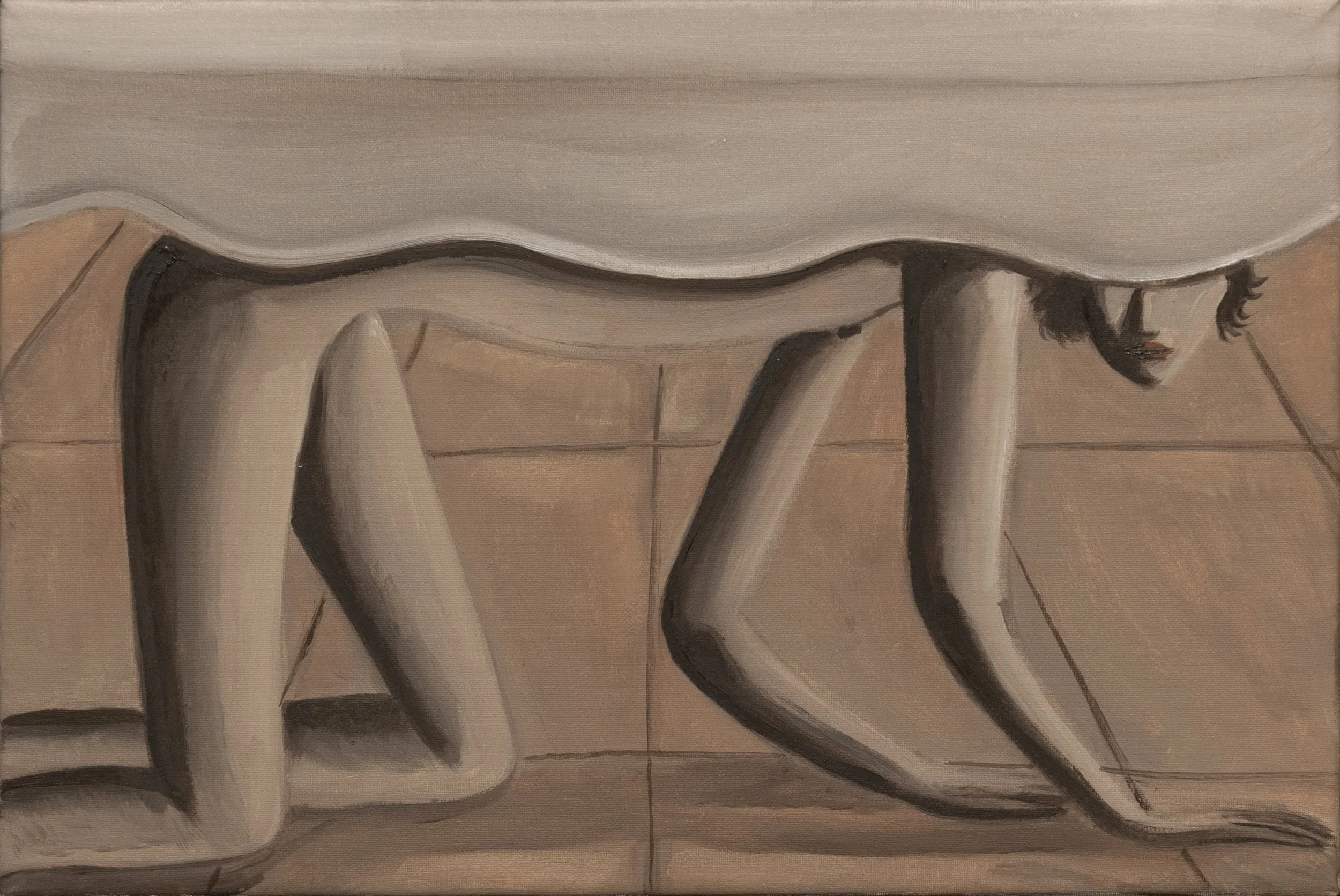
The motif of architectural space also reverberates in the work of Anne Buckwalter, where the home becomes the privileged setting for the appearance of subtle disturbances within everyday life. The artist disrupts the reassuring repetitiveness of the domestic interiors typical of small Pennsylvania communities by inserting erotic details capable of immediately capturing the gaze, transforming the passivity of contemplation into a voyeuristic act. Yet the environment does not recede into the background with the emergence of these extraneous presences; rather, the obsessive repetition of decorative motifs becomes a device that intensifies the unease of a seemingly ordinary setting, nevertheless haunted by concealed contradictions.
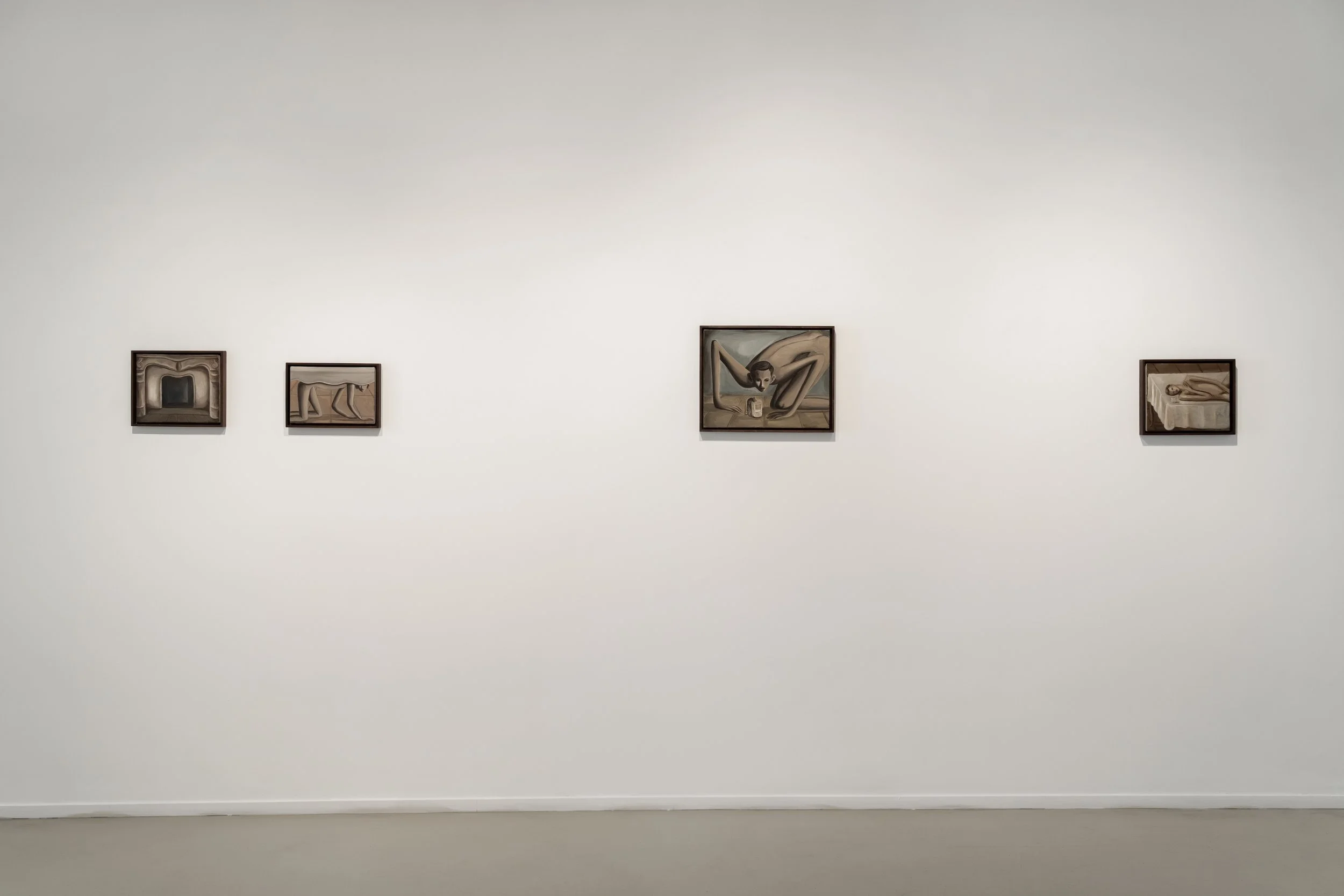
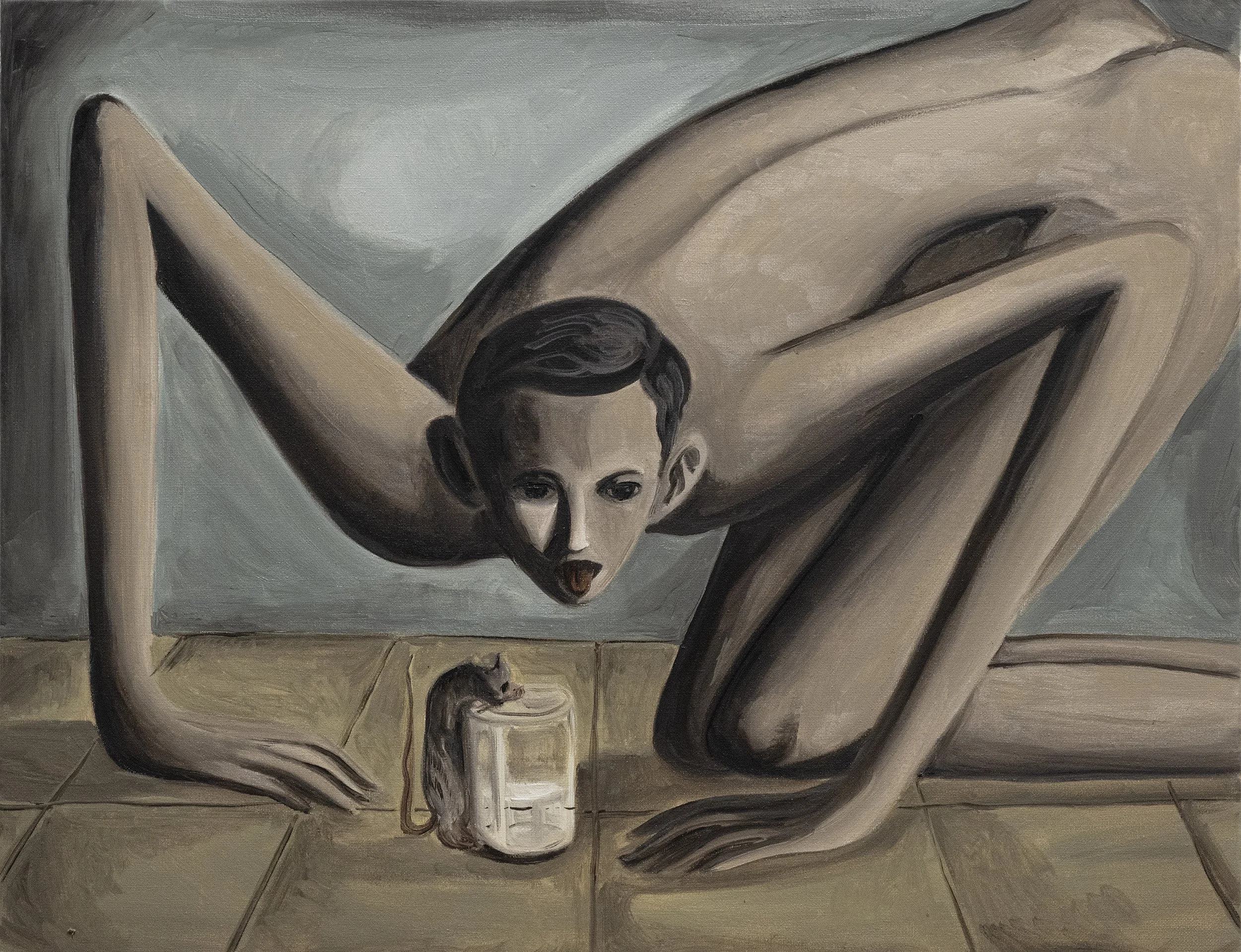
The concept of spectrality plays a central role in the grammar of Magic Realism, where it may be understood as the expression of a “magical apparition of things and figures enveloped in crystalline silence” (A. Negri). It was again Alberto Savinio who proposed, as an alternative to the better-known definition of “Magic Realism,” the term “spectral naturalism,” offering a formulation that seems to open a passage toward the uncanny. It is this nuance that resonates within the work of Dario Carratta, in which a mystical inquietude effortlessly insinuates itself into the folds of reality. In the works presented in the exhibition, the focus shifts toward the internal tension of the situations he constructs, emerging from a profound and abyssal silence. The juxtaposition of different subjects reflects the richness of the artist’s oneiric imagination, nourished by encounters and juxtapositions between animate and inanimate presences among which a symbiotic dynamic is activated, as though an occult energy could pass from one to the other in an uninterrupted flow.
The enchantment of objects constitutes the central vocation of Ruoxi Jin’s work. Her sculptural and installation-based practice takes the form of a treasure hunt in which the artist draws from reality while testing its mechanisms of activation. Through a process marked by a playful quality, seemingly incoherent objects are combined to generate fantastic assemblages: they are brought together until the perfect fit suddenly occurs, producing an instantaneous epiphany. From that moment onward, the elements merge into a magical equilibrium, transfiguring themselves into a totality that no longer allows them to be perceived as separate entities. For the exhibition, Ruoxi Jin also presents a site-specific installation consisting of two small windows embedded within the gallery’s architectural niches, almost suggesting the presence of another space, a mystery-behind-things that reveals itself through a luminous reverberation, projecting the viewer toward the elsewhere of a nocturnal exterior.
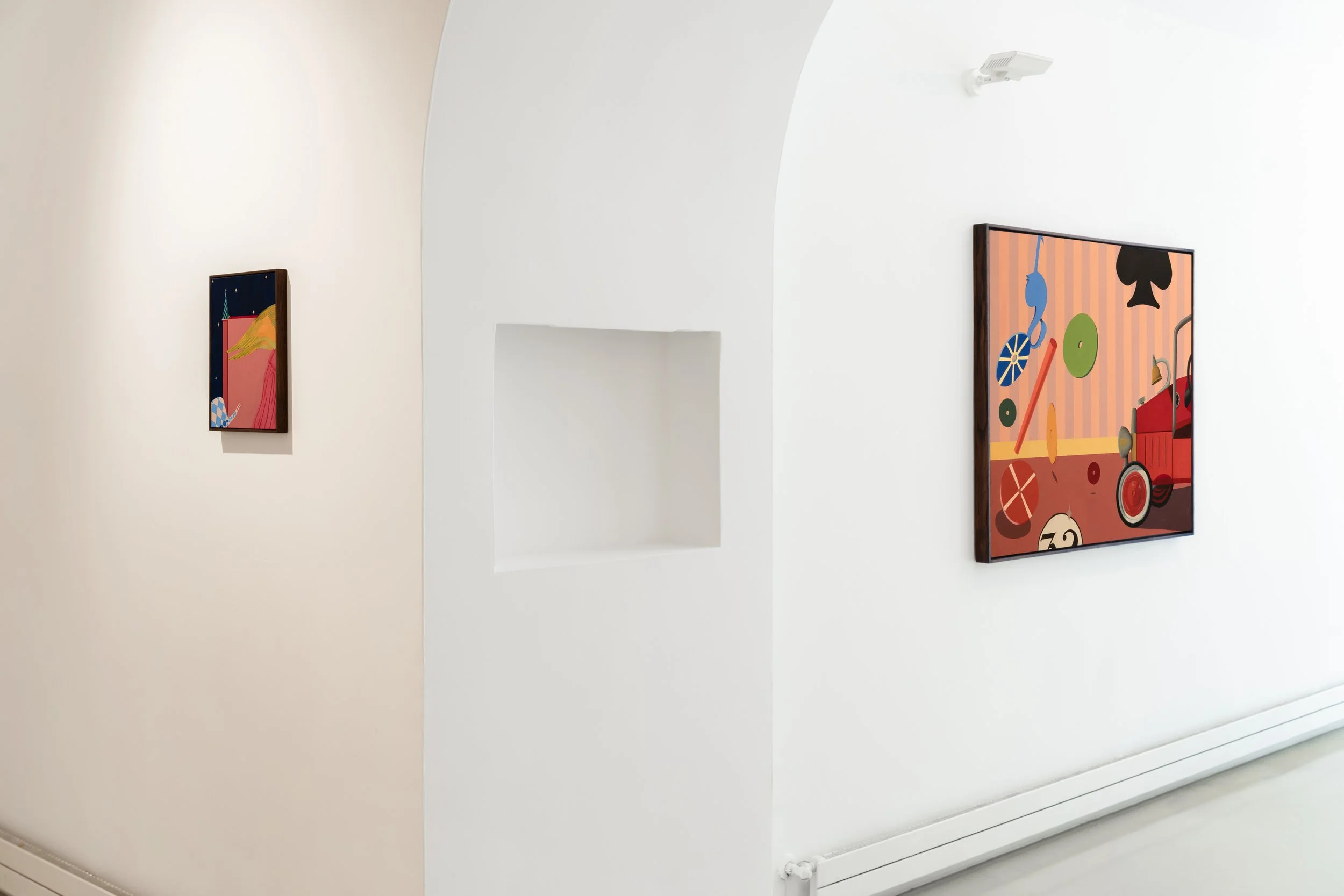
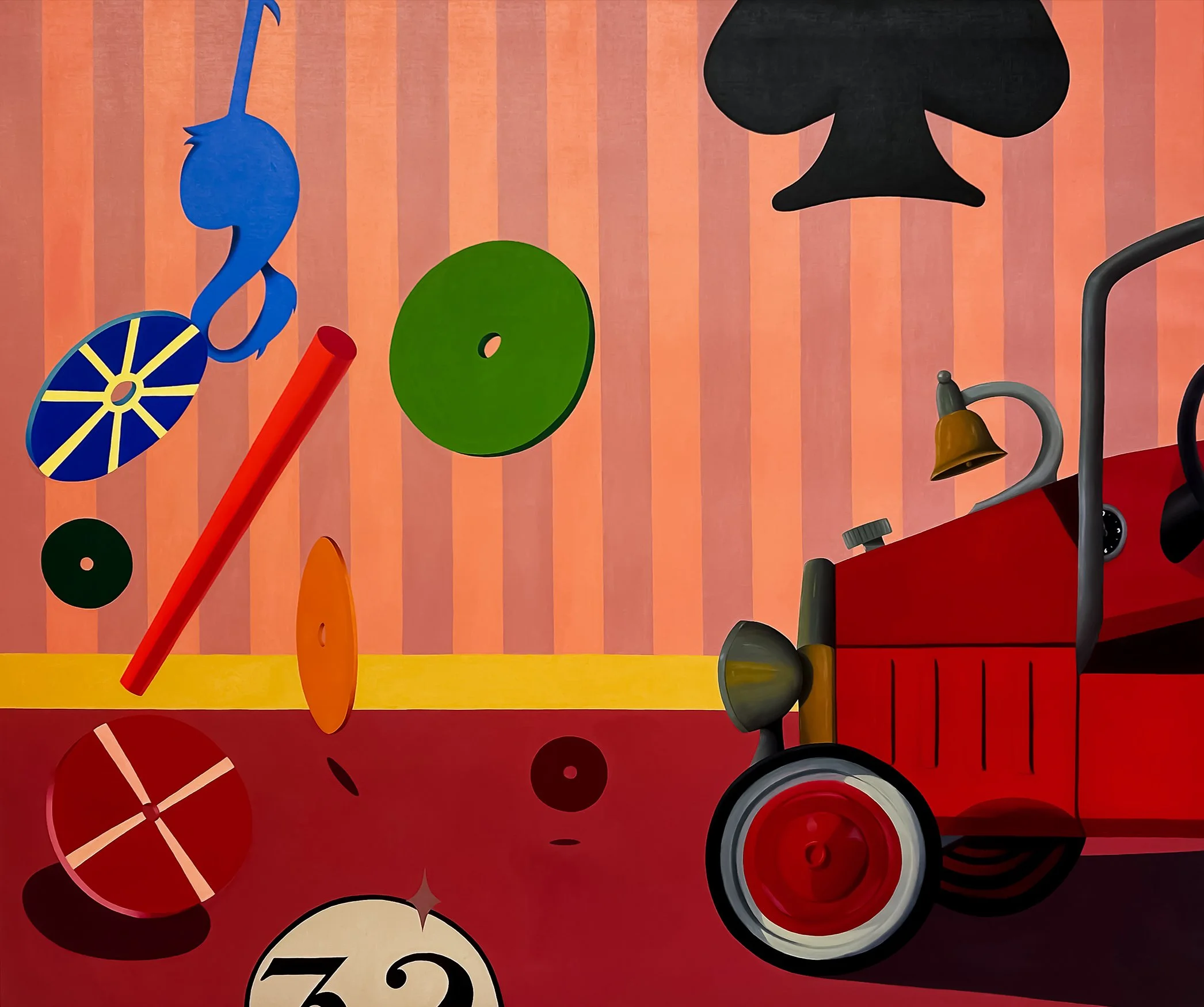
Finally, Luca Rubegni is perhaps the artist who most directly engages with Magic Realism as a language, or as a formal structure from which to observe and process his everyday reality, searching within it for a renewed enchantment. His work is based on the relation between dissimilar elements, orchestrated within unreal atmospheres. In his gaze pass the twentieth-century experiences that affirm his fascination with the Italian Quattrocento, pursuing a metaphysics constructed through the tension between color, subjects, and forms. Some examples include the recurring presence of architectural volumes and enigmatic figures - such as the angel of the Annunciation - as well as the reverberation of the dimension of play, as in Abandoned Playroom (2025), in which objects and symbols seem to float in an invisible plasma.
PRESS REVIEW