








GIRO DI VENTO
MARINA DACCI
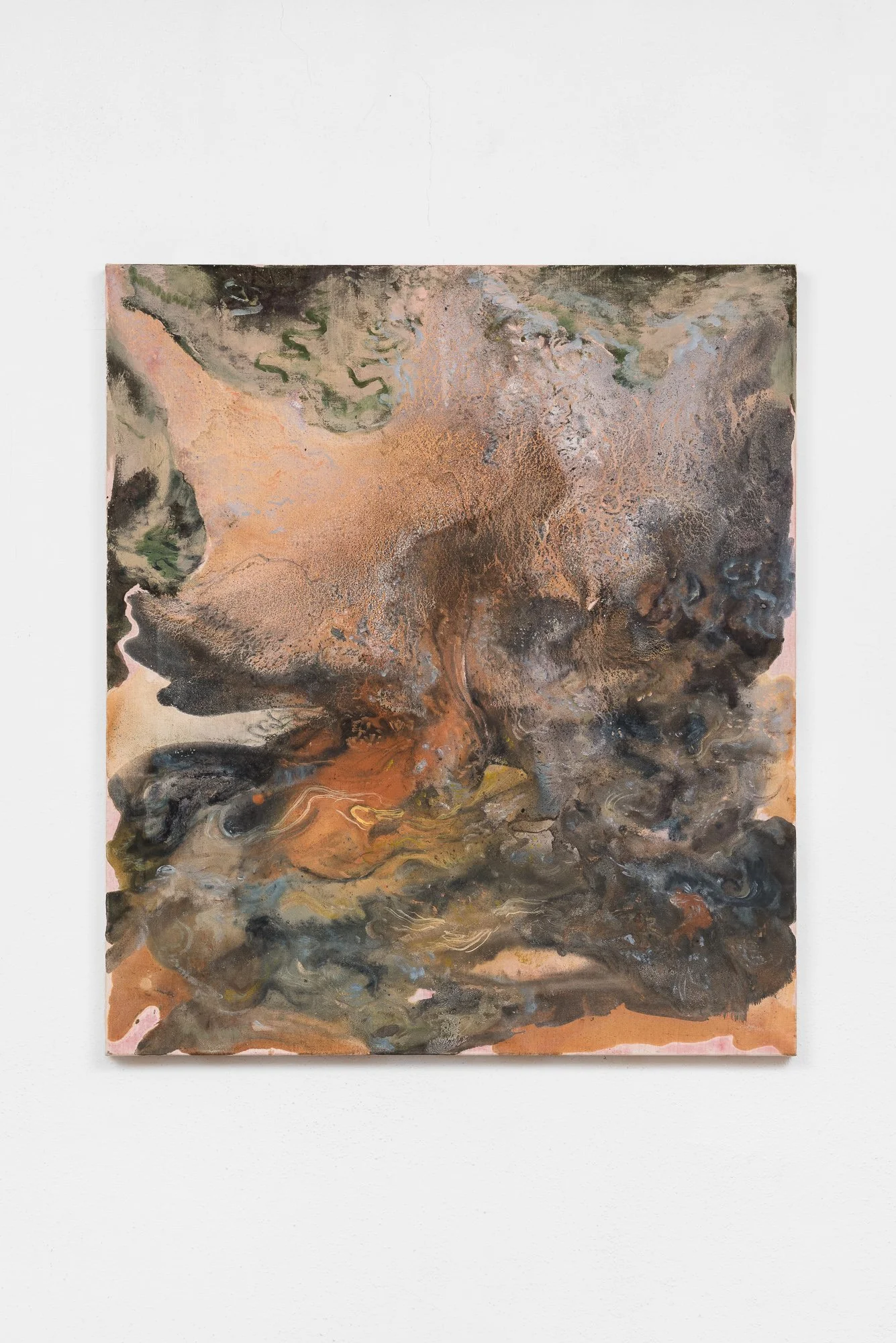
Sabrina Casadei's painting is an intervention of “re-cleaning” the act of living in landscapes unpolluted by pre-existing narratives, in which light and color become a body that arises from the body. The artist's body, invisible on canvas or paper, is in fact the true formative element of the work and of the world itself: it is the magnet that attracts what we need to feel, proceeding through revelations that painting materializes in a constant movement of energies. “Quality, light, color, depth, which are down there in front of us, are there only to awaken an echo in our body, so that it may welcome them” (*).
This apparent invisibility of the artist, dreamy and lucid at the same time, takes shape and thus becomes thaumaturgical, conveying an awareness that goes beyond the boundaries of sometimes obvious visible.
Sabrina Casadei brings into the pictorial space all the mystery of life that history carries beneath the surface.
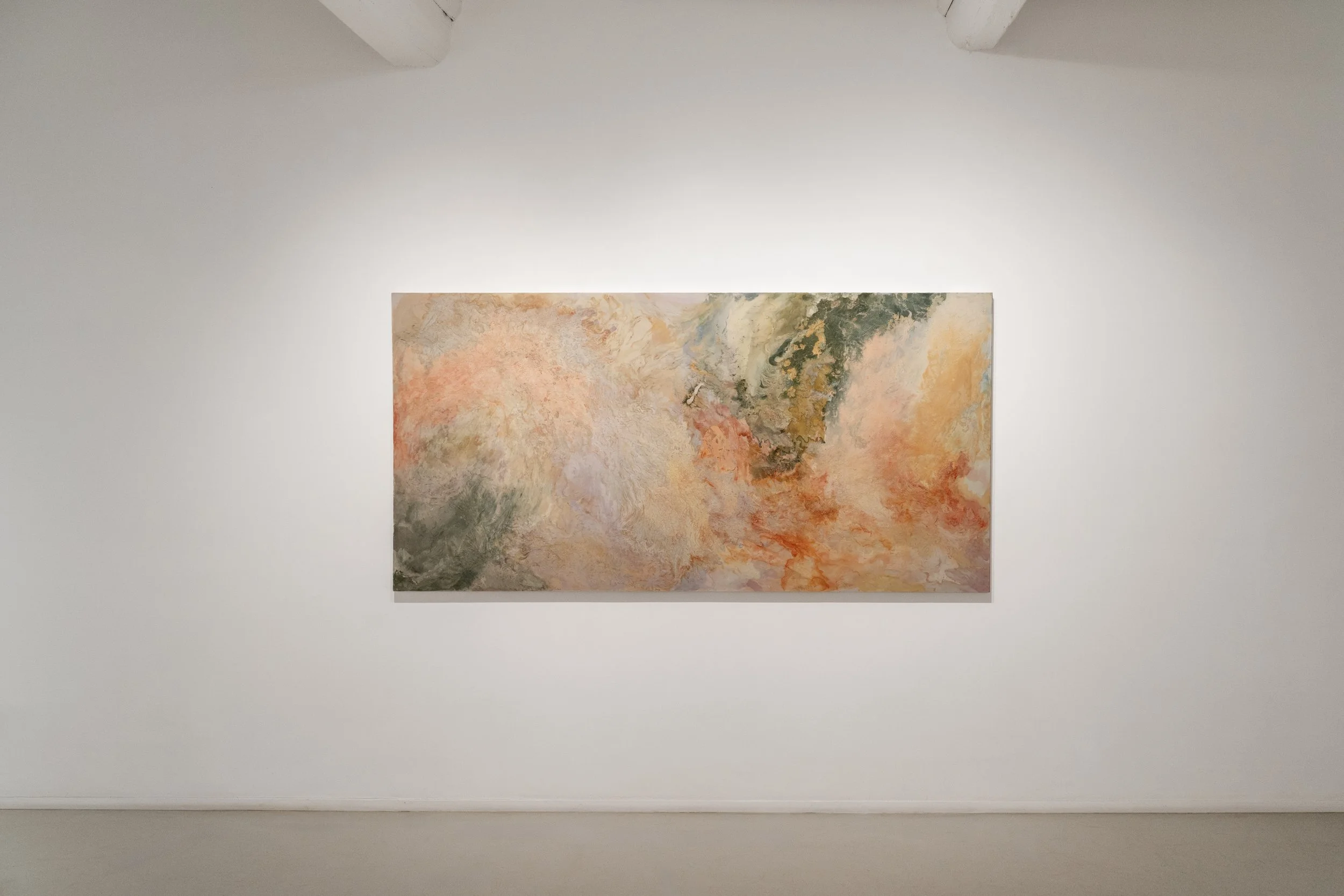
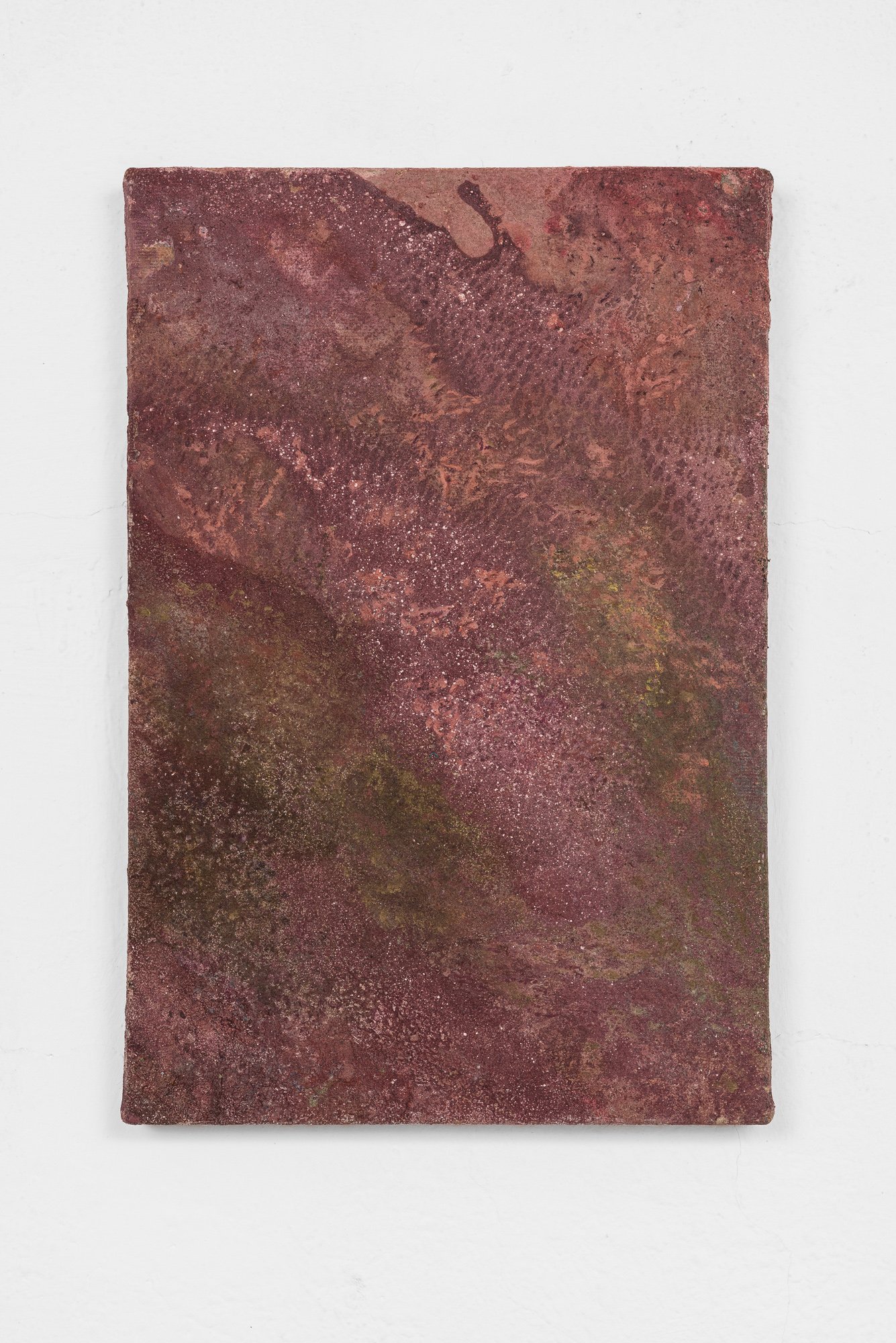
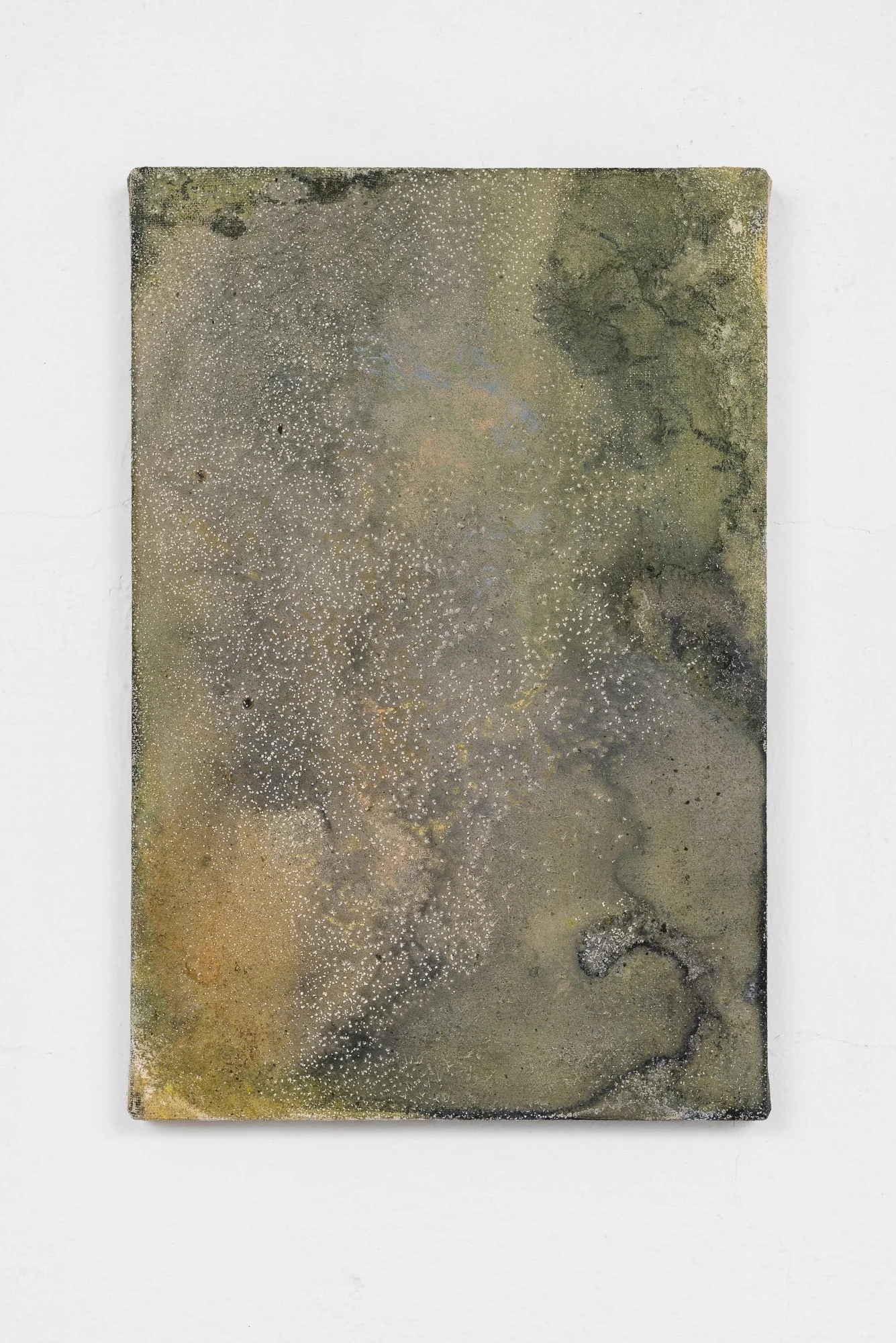
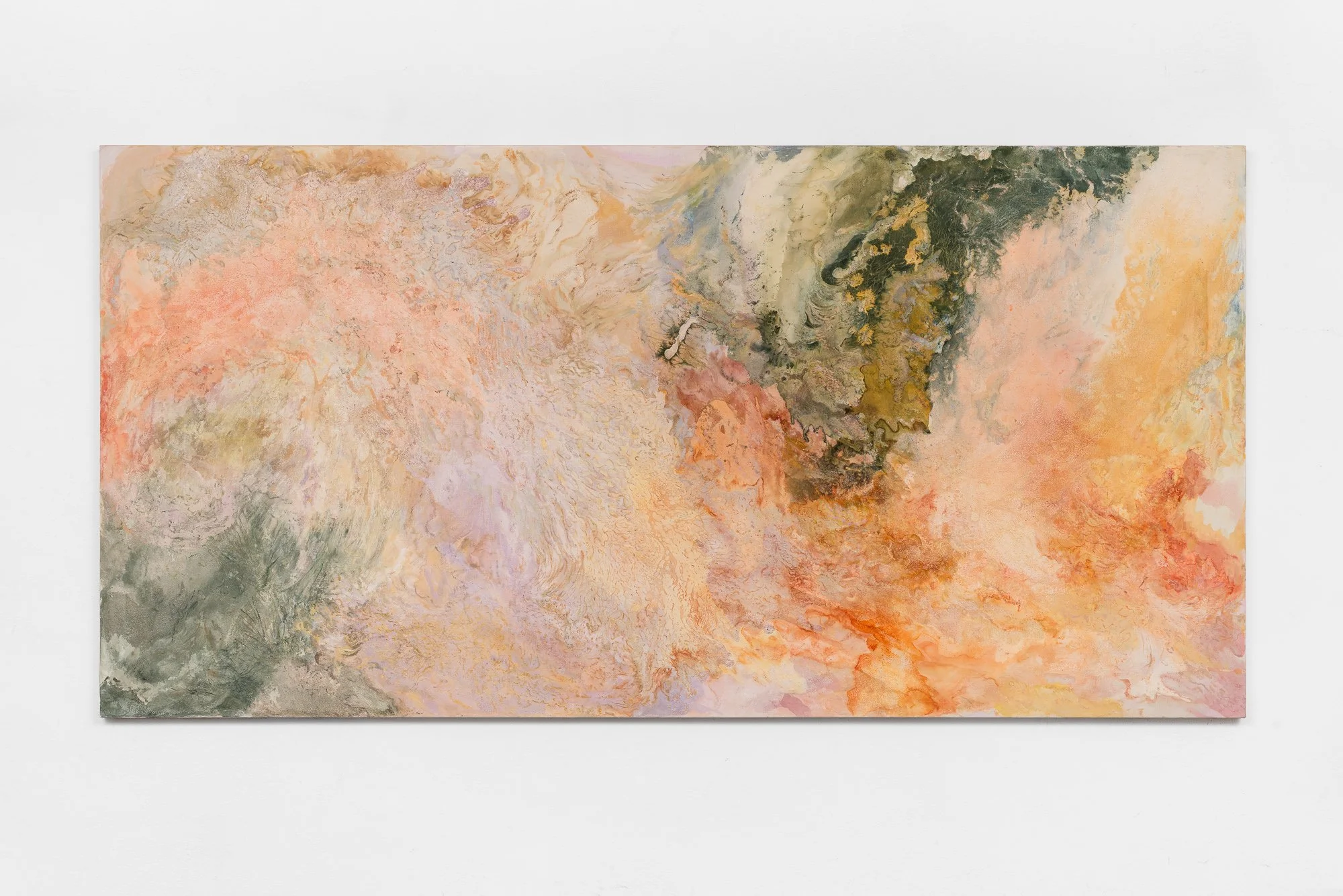
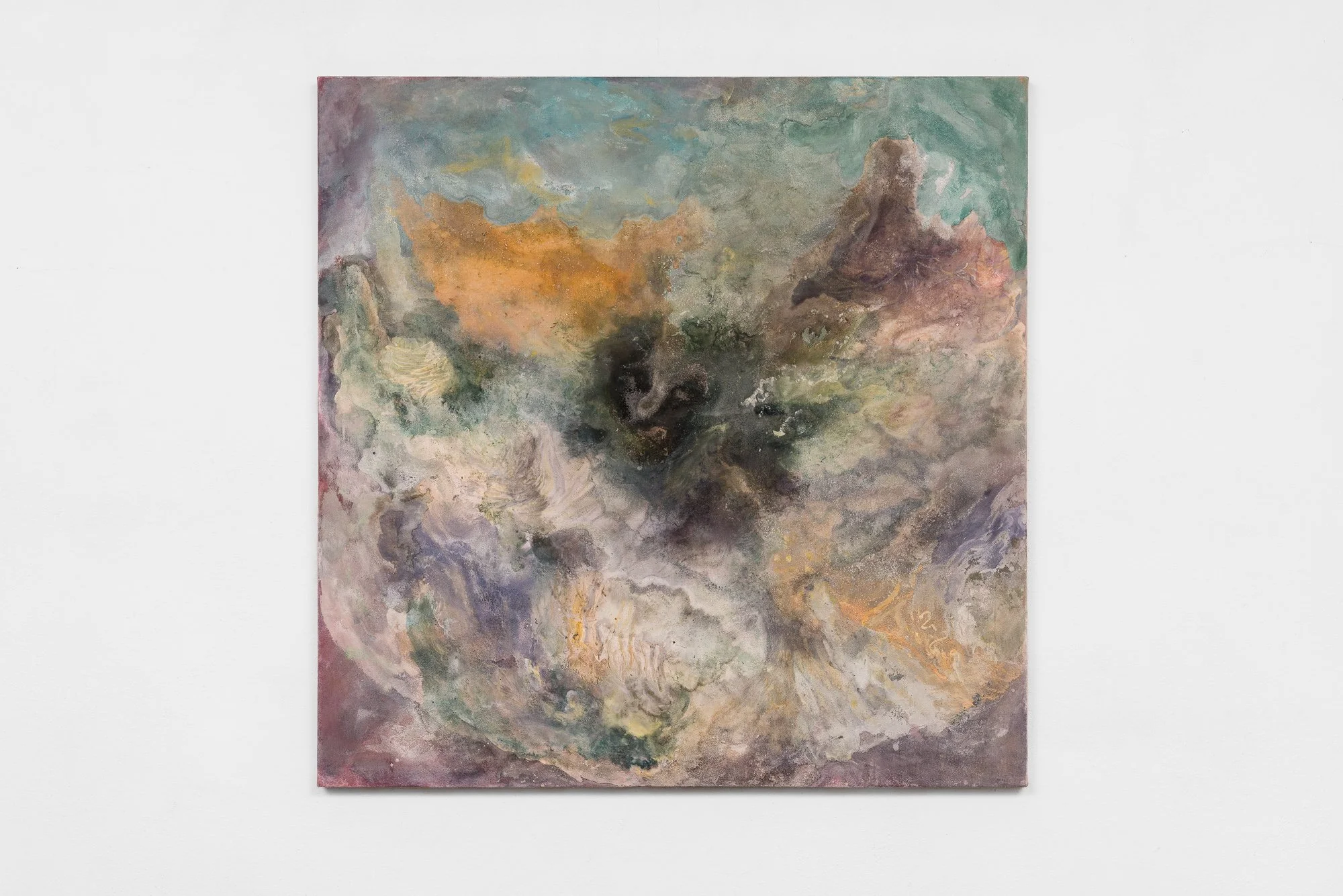
The surfaces of her works are porous, irregular, reflective and absorbent, often undisciplined, becoming a second skin for the world and for the artist herself. They measure themselves against the unexpected reactions of the materials in relation to each other: a sort of homeostasis made up of exchanges between body and matter.
The forms appear to be in constant motion: following them and imagining their evolution means following and imagining their transformations... it means giving space to the future of vision.
It is a statement against the static nature of images and in favor of intangible extensions of a cosmic rhythm.
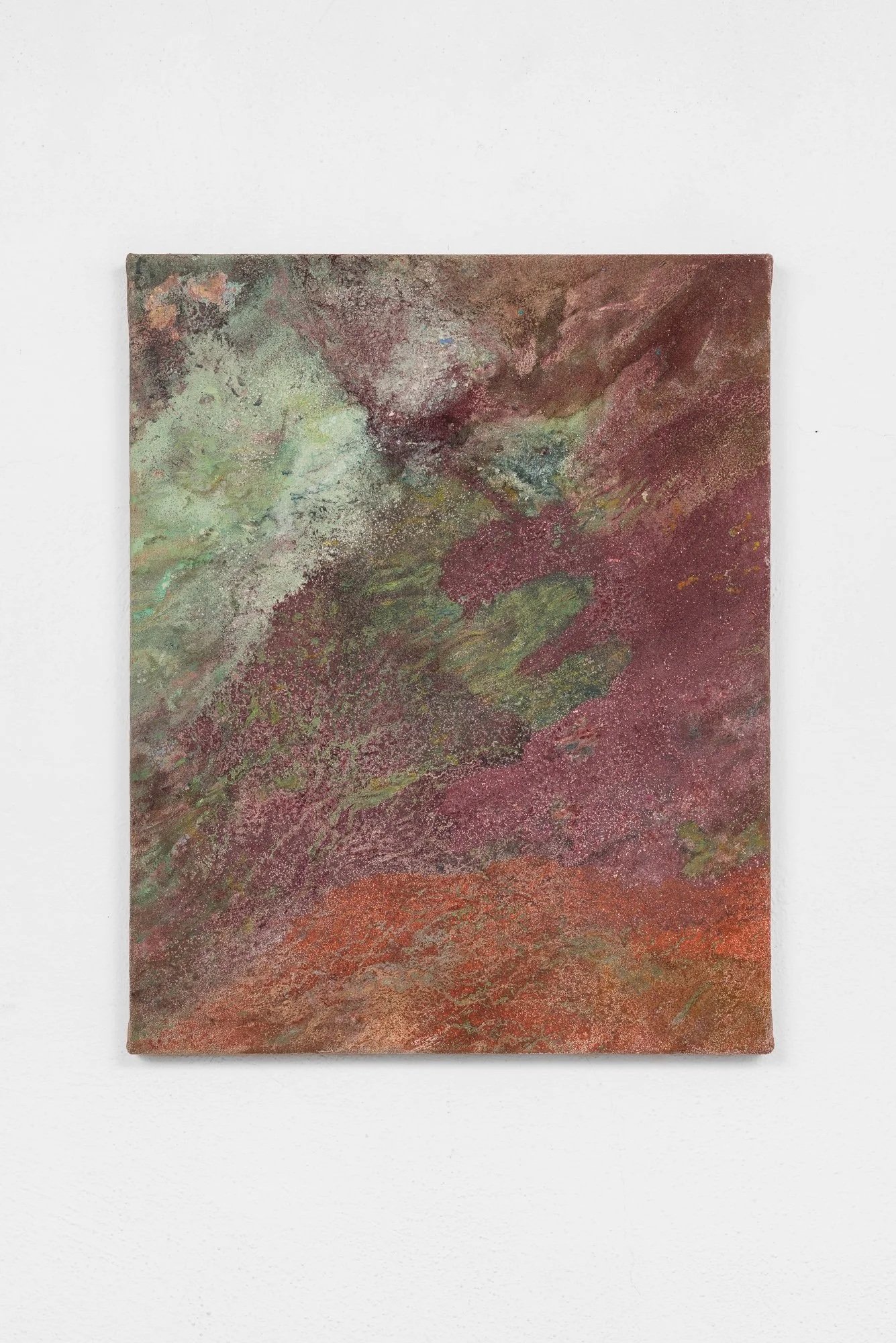
In the works on display, skies collide/meet in chromatic magma, light sinks into sidereal depths, and brightness seems to pass through vibrating water or be swallowed up in deep caves. An immersion in a multiplied space, as changeable as a dream.
During our discussions at her studio, we found many analogies with archaic and indigenous cultures that assign dreams an essential function of bringing epiphanies and omens to the surface.
The work is made of the same substance as dreams: silent and enigmatic, like an alchemical vessel that holds the true essence of things and their potential, giving substance to the invisible.
A face of the wind calls....
"I gather the sky
with cupped hands
and eyes without hunger, its elusive teachings,
instructions for coming back to life,
whatever the weather.
Slowly,
slowly,
I bring a throw back to earth,
hands full of the invisible..." (**)
Although literature and science are often starting points in her research, her approach to the work process is equally fluid, never predefined: no sketches or drawings on real subjects to be reworked, mostly layers of glances that become “embodied visions,” the result of a spontaneous gestures that convey a panicked sense of one's own existence and welcome the “will of the material” with which the artist enters into dialogue.
The gestures of exchange with the canvas and materials, in this state of semi-consciousness, resemble a mantra.
The gestation period for painting is slow and involves multiple stages.
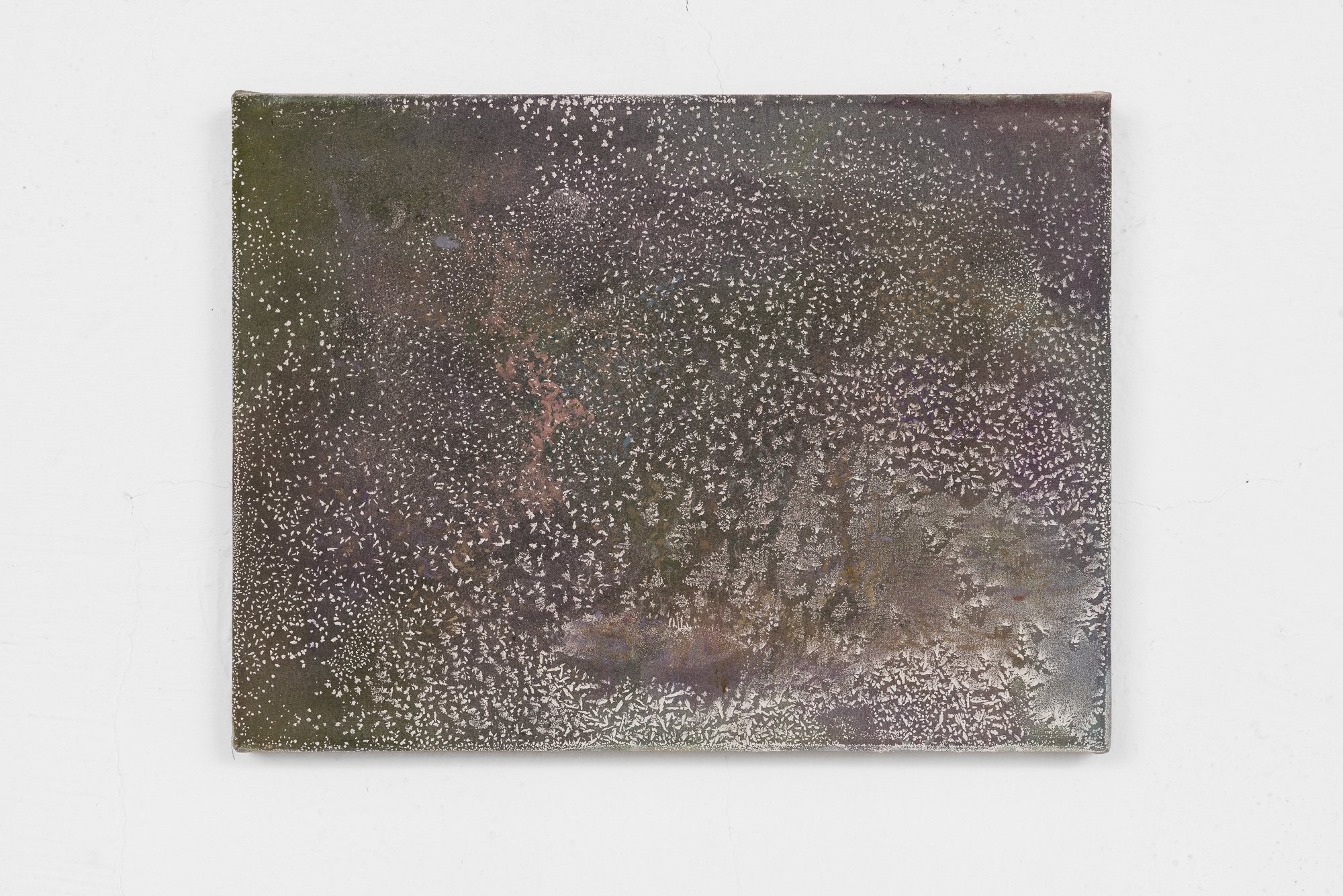
The canvas is placed horizontally to allow large areas to be covered with water and pigments, chalk, wax, dyes, and bleaches (often hypersensitive to light and humidity), which take their course on the surface, sometimes fighting each other. Subsequently, on the canvas positioned vertically, the artist intervenes by adding, subtracting, and modifying the material with other materials using a brush. The process can continue with this approach in numerous steps, generating multiple layers.
The result sometimes presents crystallizations, variations in consistency, and transparencies on the surface of the canvas, with results that differ greatly depending on the type of canvas chosen.
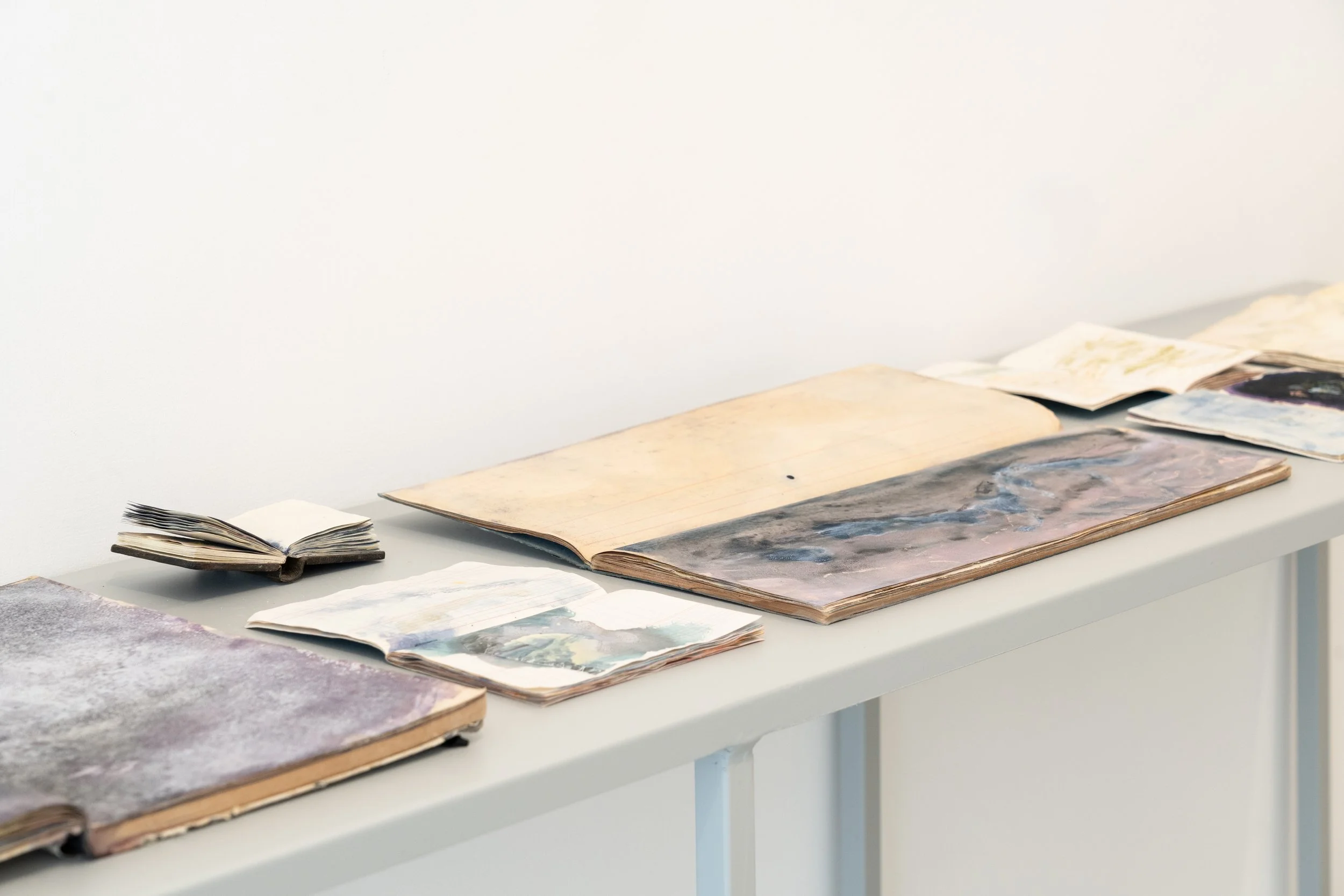
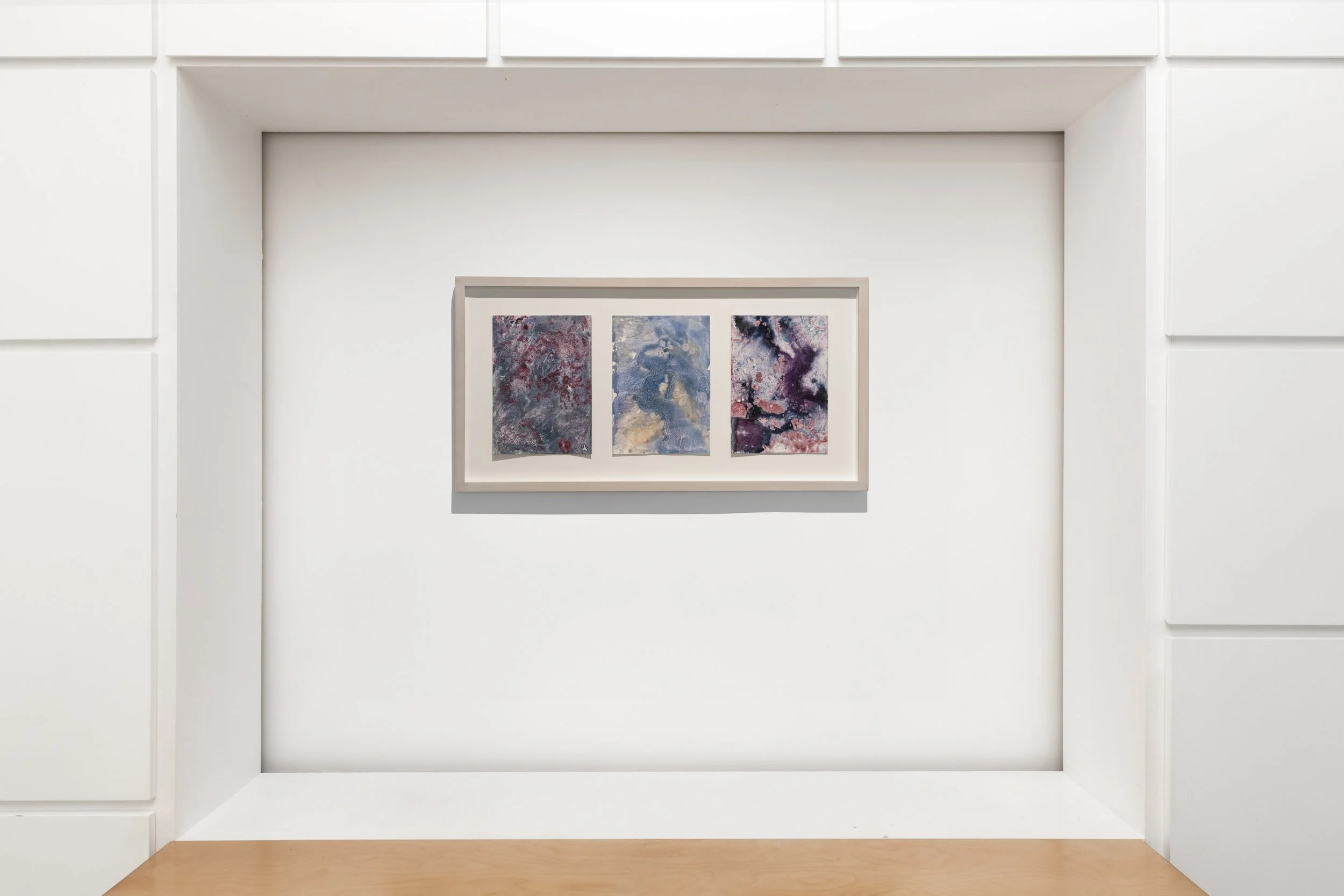
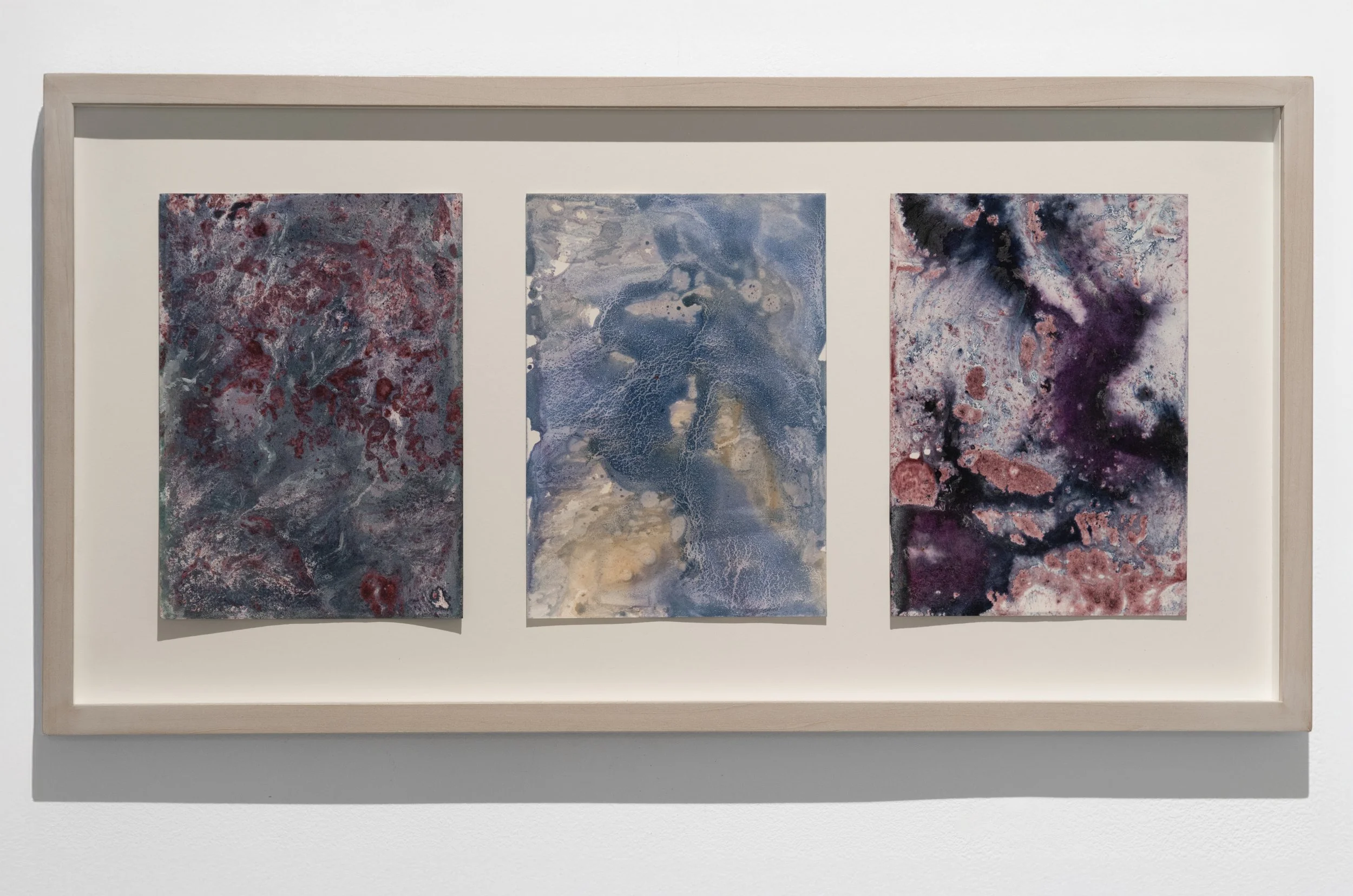
The notebooks on display, in various formats, are logbooks – or rather “travel” diaries – whose creation involved an immediacy that paper calls for. They contain thematic collections (Maps of Skies, Scattering Flowers, Blue, Spirits and Familiars, Currents, Marshes, Underwater), combining colours in a narrative that materialises in the foliation rather than in the stratification. Training the eye and the hand.
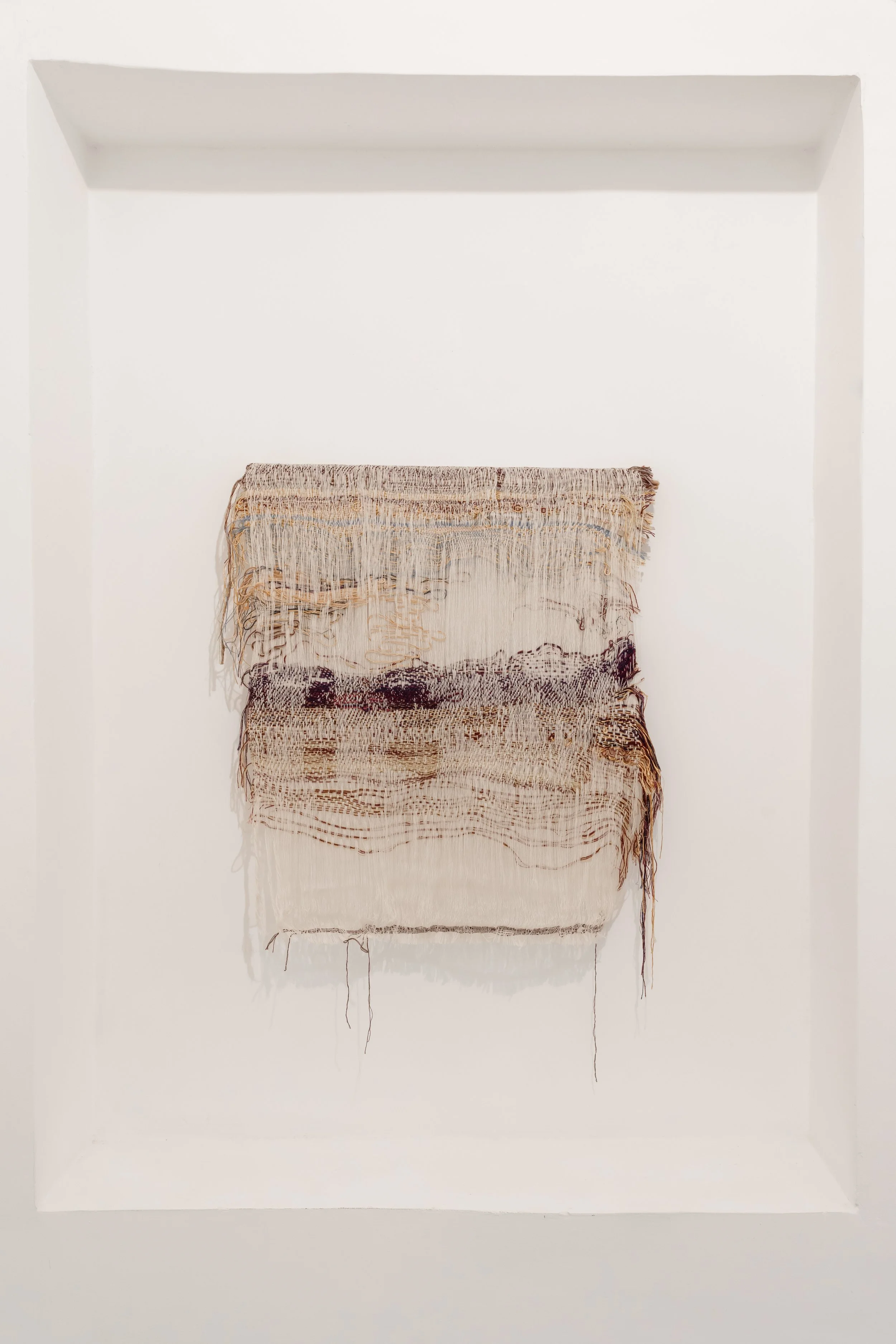
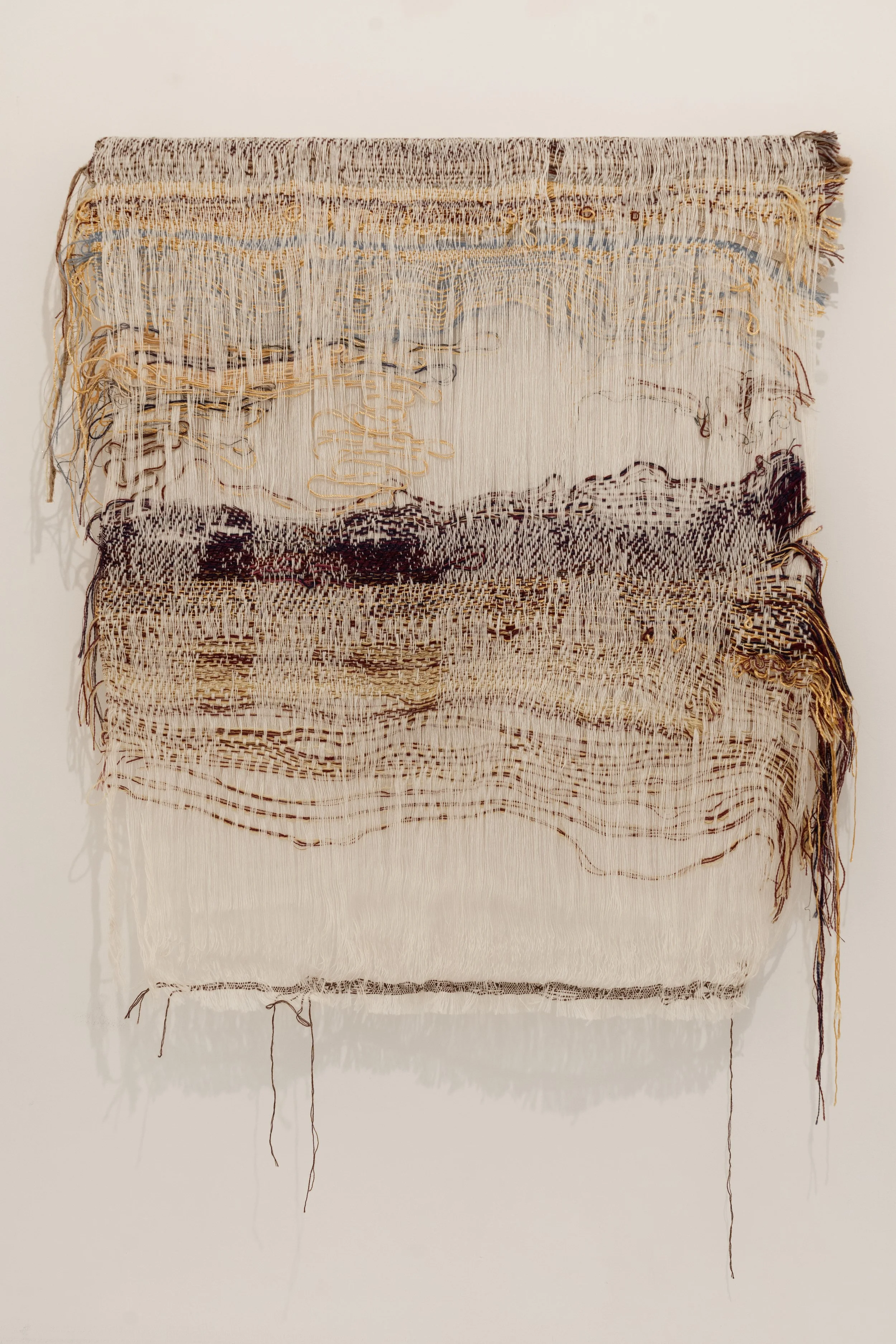
In experimenting with small weaving, time has acted in reverse in a patient and almost shy intervention. The digital jacquard loom weaving has been dissected and “broken down” until the initial image is lost. Manual interventions have made its texture yielding, not without errors, generating irregularly fluid horizons.
This artistic and psychic attitude opens up to an original collective sharing: observing Sabrina Casadei's works, one abandons the relationship with the everyday physical space in which one is immersed, sucked into them by a peculiar centripetal force. In the instability of this painting, we seem to find a different balance that coordinates with larger systems: calibrating our presence to the rhythm of the majestic landscape and transforming us into fragile membranes. The goal is not to be seen, but to belong; the possibility of inhabiting space without occupying it, operating on its own frequencies. Omens, transitions, thresholds: his practice lies between dream and sign, a syncretism in which the work is constantly nomadic.
(*) Maurice Merleau-Ponty in L'occhio e lo spirito, SE, 1989 (**) Chandra Livia Candiani in Fatti vivo, Einaudi, 2017
PRESS REVIEW
ESPOARTE, IL GIORNALE DELL’ARTE, SEGNONLINE, EXIBART, ARTRIBUNE